Posts

Showing posts with the label sin

Idols With Clay Feet

Image
Pixabay I just finished throwing out two books. There was nothing wrong with the books, or the information that they contained. I also made a mental note to go through some study material that I wrote and taught several years ago to remove references to one of the books I have just consigned to the garbage. It's not the books, or the material. It's the author who wrote the books. I won't say that he has ever been an idol of mine. But I know that he has been the idol of others, world-famous in fact. He started a movement and became a guru among evangelicals, much quoted and much emulated. And perhaps everything he said and did (at least in his ministerial role) was exemplary and worthy to be followed. But it turns out he is an idol with clay feet, who has systematically abused his power over many years while in the ministry,  This abuse particularly relates to his relationship with women. As a woman, and one who knows a little about abuse of power in ministry, I don...

Face-to-Face

Image
Pixabay I once asked my pastor why it seemed as though my prayers hit the ceiling and bounced back at me without ever reaching heaven. He reminded me that unconfessed sin creates a barrier that needs to be removed so that communion is restored between the Creator and His creation. As I read the verse for today, I was reminded of his words. Isaiah writes: “Y our iniquities have separated you from your God; your sins have hidden his face from you, so that he will not hear .” (59:2) The expression of the prophet reminded me of a series of messages I prepared recently for a ladies’ retreat and of a revision of that series that I am going to start today. In the first session we talk about seeking first God’s “face” rather than always looking for His “hand.” In other words, desiring God Himself more than we desire His gifts. As I reviewed yesterday I was reminded that when the Scriptures speak of God’s “face” they are referring to His presence, to that intimacy of relationship that we ne...

Jesus Loves the Little Children

Image
Pixabay The Gospel and the young. However you define the “children” Jesus refers to in Matthew 18:1-14, the result is the same—don’t cause the young to stumble in their faith, or else! Jesus was responding to a question put to Him by His disciples: “ Who is the greatest in the kingdom of heaven? ” (18:1) Considering some of the other discussions they had among themselves I suspect they wanted Jesus to affirm that they, for the sacrifice of following Him, qualified for the position. Instead Jesus takes a young child and uses the simplicity and fervour of a child’s faith as an illustration of who will be the greatest in the kingdom. That provides a launch pad for this: “ But if anyone causes one of these little ones who believe in me to sin, it would be better for him to have a large millstone hung around his neck and to be drowned in the depths of the sea ” (18:6). Yikes! This leads to an even more graphic description of what is necessary to protect the budding faith of the young. ...

The Key

Image
Pixabay I have a collection of old rusty keys. I also have some nice, shiny ones. They come in handy. They connect to Calvary. “ And I will put enmity between you and the woman, and between your offspring and hers; he will crush your head, and you will strike his heel ” —Genesis 3:15. The story begins in Genesis with the first couple and the first sin—at least as far as the historical record is concerned. God’s plan to deal with what He knew was inevitable began long before time began, as is suggested in Revelation 13:8 when John refers to the “… the Lamb that was slain from the creation of the world .” It's a pity. No sin, no need for a Saviour, or a cross. James Kennedy remarks in Cross Purposes, Discovering the Great Love of God for You , that we seldom if ever hear the word sin used today—not even from many of our pulpits. Many people go so far as to deny that such a thing as sin exists. We have invented more “politically correct” terms...

Blooming

Image
Pixabay “ …led by the Spirit…to be tempted by the devil. ” (Matthew 4:1) Before His public ministry began, and just after His baptism by John, Jesus was sent into the desert. Most of us are familiar with the events that took place while the Lord was alone with Satan. We know that each time He was approached and made an offer, He answered back with Scripture. We understand how important it is, as the psalmist writes, to have “ …hidden your word in my heart that I might not sin against you ” (Psalm 119:11). We know that Hebrews tells us, describing Jesus as, “ …one who has been tempted in every way, just as we are—yet without sin ” (4:15). But we don’t often linger at that first verse, and wonder at its message and its implications. We know temptation is inevitable. Paul was right when he penned: “ No temptation has seized you except what is common to man ” (1 Corinthians 10:13). But to be deliberately led by the Spirit of God toward an encounter with Satan and temptation? Why would...

That Of Which We Are Capable

Image
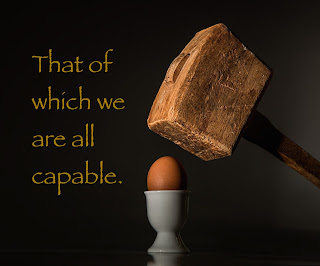
Pixabay Sometimes it only takes the right people or circumstances to reveal the evil that lies deep within. Genesis 37 tells us that story. Did Israel (a.k.a. Jacob) know how much his older sons hated their younger brother, Joseph? Had the older boys walked around camp with smiles pasted on their faces but harbouring a deep-seated resentment in their hearts? Joseph was not only preferred by their father, but had shared some pretentious ambitions with them—he would rule over them. Did Israel choose not to believe that his boys were capable of doing harm to the one he openly favoured? In any case, Israel sent Joseph out alone to find his older brothers. It became the right time and the right place to act upon their anger, jealousy and hatred. When Joseph arrived at Dothan to find his brothers, the Scriptures say: “ …they saw him in the distance, and before he reached them, they plotted to kill him ” (37:16). Reuben convinced them to simply throw Joseph into a nearby cistern. His plan...

Break My Heart...

Image
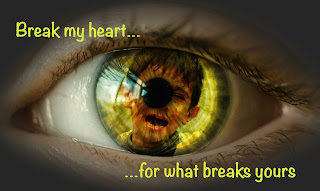
Pixabay “ Break my heart for what breaks yours ” is a line from a Hillsong United song, called Hosanna . It came to mind this morning as I read Genesis 6. God looks down and sees the state of the world and this is recorded: “T he Lord saw how great man’s wickedness on the earth had become, and that every inclination of his heart was only evil all the time. The Lord was grieved that he had made man on the earth, and his heart was filled with pain ” (vss. 5, 6). We are not accustomed to think of God as being in pain. Somehow He is viewed as being above all that, particularly when we consider that Revelation tells us that there is no pain in heaven (Revelation 21:4). Yet that is where He resides. Perhaps the clue there is that John is describing how it will be after the second coming and the final judgment on evil and evil men. In the meanwhile, even God feels pain. Even the Almighty lives with a broken heart. The song asks for a heart broken by what breaks God’s heart, and here in Ge...

Remember...That God "Forgets"

Image
Pixabay Remember...that God "forgets." The writer to the Hebrews quotes Jeremiah 31:31-34 when he writes: " For I will forgive their wickedness and will remember their sins no more " (Hebrews 8:12). This is followed up with, again quoting Jeremiah, " 'Their sins and lawless acts I will remember no more.' And where these have been forgiven, there is no longer any sacrifice for sin " (10:17, 18). In both cases these wonderful verses are preceded by a promise from God to " ...put my laws in their hearts, and...write them in their minds " (10:16 and vice-versa in 8:10). These are changed people, renewed in heart and mind, and forgiven. God is omniscient. This fifty dollar word simply means that He knows everything. And logically, at least to my mind, omniscience means He can't forget anything. This is why I wrote "forgets" as I did. Because God really doesn't forget anything. I think this is important because one o...

Snow White

Image
Pixaby My friends in the north have already had their first skiff of snow. When I went downstairs to make my coffee this morning I noticed that the car had frost on it—the first of the season. The inevitable is happening. Winter happens. Be it mild or fierce, it is sure. Just as surely comes the inevitable need to face a much bigger issue than frost and snow flurries. At some point in life every one of us has to face the offenses we have committed against God—what the Scripture calls sin. One of the ladies we worked with in Caracas was always quick to remind us that David, often held up as a godly example, was not perfect. If Elizabeth knew nothing much else about the Bible she certainly knew the story of David's sin against Bathsheba and her husband, Uriah. God did not seek to hide the sin of one of His own. In recording David's sin, and its consequences, the Almighty also provided the backdrop for a wonderful description of the remedy for that sin. Psalm 51 descri...

Spot Cleaner

Image
Pixabay If memory serves, Michael Jackson tried to change the colour of his skin. That was probably the most extreme example during this present era of the measures to which people go in the constant search to feel better about themselves. The other example that comes to mind is the woman who underwent endless surgeries to make herself look like Barbie of the famous (or infamous) Barbie and Ken doll collection. On a smaller scale we "nip and tuck," cream and cover, make-up and dress-up, tone-up and touch-up, every flaw we think we see that keeps us from being whatever someone else has decided is handsome, beautiful, acceptable, marketable, relevant, or worthy of being taken seriously.  Then along comes someone like Jeremiah to expose, literally, the ugliness that really counts and the impossibility of covering that ugliness up at any price or by any means. The prophets spent a lot of time describing the consequences attached to the continual rebellion and disobedien...

My Chains Came Off

Image
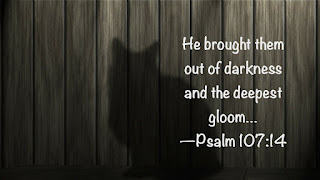
Pixabay There are few things as scary as being arrested in a third-world country. I know because I've been there. So when I read Psalm 107:10-16, I can relate. Here's what the psalmist says: " Some sat in darkness and the deepest gloom, prisoners suffering in iron chains, for they had rebelled against the words of God and despised the counsel of the Most High. So he subjected them to bitter labor; they stumbled, and there was no one to help. Then they cried to the Lord in their trouble, and he saved them from their distress. He brought them out of darkness and the deepest gloom and broke away their chains " (107:10-14). I was never chained, but I remember the " darkness and deepest gloom ." But the psalmist's words remind me of something far more frightening than ending up in a Colombian prison. They speak of the prison where lives every unrepentant person. This is the state of the soul who doesn't know Jesus Christ as only sufficient and per...

Consequences, Not Condemnation

Image
Pixabay I don't know why I think I can get away with it! But I suppose I am no different than most people in thinking that somehow God will overlook my "little" failures and follies. But offending God has its consequences, and eventually our failures and follies will come back to haunt all of us. And in case we don't think that our "little" ones are all that bad and God will overlook them, James 2:10 reminds us that to break one commandment is to break them all. And God will not let us off the hook. This was the warning issued by Moses in Numbers 32. Two and a half tribes of the twelve that had set out for the Promised Land had decided to settle east of the Jordan River. This was fine. But there was a condition. When it came time for God's people to cross over the river to take possession of what God had promised, the two and a half tribes were to enter the land with their brothers and help them conquer the Canaanites who lived there. Then and on...

Consequences, Not Condemnation

Image
Pixabay I don't know why I think I can get away with it! But I suppose I am no different than most people in thinking that somehow God will overlook my "little" failures and follies. But offending God has its consequences, and eventually our failures and follies will come back to haunt all of us. And in case we don't think that our "little" ones are all that bad and God will overlook them, James 2:10 reminds us that to break one commandment is to break them all. And God will not let us off the hook. This was the warning issued by Moses in Numbers 32. Two and a half tribes of the twelve that had set out for the Promised Land had decided to settle east of the Jordan River. This was fine. But there was a condition. When it came time for God's people to cross over the river to take possession of what God had promised, the two and a half tribes were to enter the land with their brothers and help them conquer the Canaanites who lived there. Then and on...

Just A Little More Time

Image
troymccomas.wordpress.com (Google Images) Pilate might have thought that somehow he had been able to wiggle his way out of assuming guilt for the death of Jesus, but now matter how carefully he washed his hands on that terrible day, other blood stains could not be removed. You see, Pilate had been responsible for many deaths during his reign as Rome’s representative in Jerusalem.  He might have excused his actions as simply “doing his duty.” After all, governors held the right of life and death in their hands as part of their mandate to preserve order. Absolution from guilt in those cases could be argued. But maybe not. In Luke 13:1-9, in the midst of one of His discourses, some Galileans brought Pilate to Jesus’ attention. They reminded Jesus that Pilate had sent his soldiers to kill some citizens of Galilee while they were in the Temple offering their sacrifices. Holy places were supposedly sacrosanct, untouchable. Pilate’s actions labeled him as the worst of the worst. The a...

Swept Clean and Put in Order, But Empty

Image
Google Images Perhaps it’s just because I choose to read them above others, but it seems as though more and more posts and articles are appearing on the subject of revival, and all that is implied by the word. This morning a pastor friend posted a plea for prayer for revival among our leaders, churches and believers. Shortly after I read his post, I turned to my reading of the day and was met by this passage from Matthew 12:38-45. Jesus is rebuking the Pharisees and religious authorities. They want Him to produce a “sign” to prove His authority. Jesus refuses. But He points them back to their roots, to a piece of history that they know only too well. He directs them to the story of Jonah and his mission to Nineveh. “ The men of Nineveh will stand up in the judgment with this generation and condemn it, for they repented at the preaching of Jonah; and now one greater than Jonah is here ” (Matthew 12:41). Roots. Repentance. Revival. The root, as Jesus implied, was not in another new s...

Washday

Image
disabilityclothesline.weebly.com (Google Images) I was on my way down to the basement to put some items in the recycle bin when a neighbour from the floor below me got on the elevator. She had a coffee cup in her hand. Her sister was in the laundry room and she was going down for a chat. I commented that Monday was the traditional day for doing laundry. She laughed and remarked that some things never change. As we got off the elevator I mentioned that in my mother’s day it always seemed to be a race on Monday morning to see who would be first to get their wash on the line. That thought prompted some other thoughts related to what I had read earlier this morning. I am working myway through the Sermon on the Mount, much of which is recorded in Matthew 5 through 7. Other parts of the Gospels record smaller sections of these famous teachings of Jesus. Among the things that struck me this morning was Luke 6:37b which says: “ Forgive, and you will be forgiven .” What I read from the Gosp...

Getting to the Heart

Image
openforum.com (Google Images) John the Baptizer had been arrested (Luke 3:19, 20). When Jesus heard about His cousin (Matthew 4:12), He and His disciples left Judea and headed back to Galilee. But He chose to return via Samaria. The Jews and the Samaritans didn’t get along, but Jesus was on kingdom business and had a visit to make with someone with whom most Jews would not even pass the time of day. They stopped at a well near Sychar. Jesus sent His disciples off to find food while He stayed at the well to rest—and to keep an important appointment. At noon, a woman arrived at the well. Normally women collected their water in the early morning or in the evening, to avoid the heat of the day. That this woman came at noon was a strong indication that she was not an accepted member of Sychar’s society. In any case, most Jewish men would not have spoken to her. She was a woman and a Samaritan at that. But Jesus wasn’t “most men.” He asked her for a drink of water and so began the co...

When You Think You've Gotten Away With Something...

Image
Google Images Second Samuel 11 and 12 records a sad episode in the life of David. I remember that whenever I mentioned David as an example of someone with whom God was pleased one of the ladies in my study group in Caracas would immediately remind me of these sordid events. Yes, David wasn’t perfect—far from it—as these chapters prove. David should have been out leading his troops (2 Samuel 11:1). He did not look away when he should have (11:2). He yielded to the temptation to exercise his power wrongly and took what wasn’t his to take (11:3, 4). Knowing his actions would soon be discovered, he orchestrated the death of an innocent man, one of his faithful servants and soldiers (11:6-15). And the Scriptures say “ …the thing David had done displeased the Lord ” (11:27). In chapter 12 we read about how God’s servant, Nathan, confronted David about his sin and the king repented (12:13), recognizing that ultimately that what he had done was an offense against God. But the damage was do...

At the End of the Cycle

Image
Google Images The last three chapters of Judges present us with a bizarre, but interesting picture of the cycle that the nation of Israel was living. For us it is also a fascinating example of the redemptive process. In Judges 19 we are introduced to a Levite who ended up in Gibeah among the Benjamites. He had stopped there for the night with his wife and one of his servants, only to discover that the townsfolk were less than friendly. In fact, the story reads like a page out of experience of the angels who had visited Lot in Sodom before that city’s destruction by God (Genesis 19). Except in this case, the woman died and the Levite, upon his return to his home, committed the bizarre act of dismembering his wife’s body and sending parts to the each of the tribes of Israel. All this serves to remind us just how terrible the situation was in Israel during these dark days when the evil of men was at its lowest point. The dismembering of the body, as horrific as it was, served to galva...

Nothing to do with Driving Miss Daisy

Image
Google Images You really have to read to the end of the chapter 33 of Numbers. Take courage! After we labour through the names of all the places the Israelites wandered through on their 40 year pilgrimage we finally get back to where we (or they) are supposed to be—on the edge of the land that God had promised to Abraham back in Genesis. At the end of this chapter, as the Lord instructs Moses as to what the Israelites are to do once they enter the land, comes an important statement. God has just told Moses that they are to drive out those who currently live in the land and destroy any evidence of their pagan worship. Then comes, “ But if you do not drive out the inhabitants of the land, those you allow to remain will become barbs in your eyes and thorns in your sides. They will give you trouble in the land where you will live ” (33:55). History would prove this to be sadly true. History would also prove the truth of the Lord’s next statement in verse 56: “ And then I will do to you...